



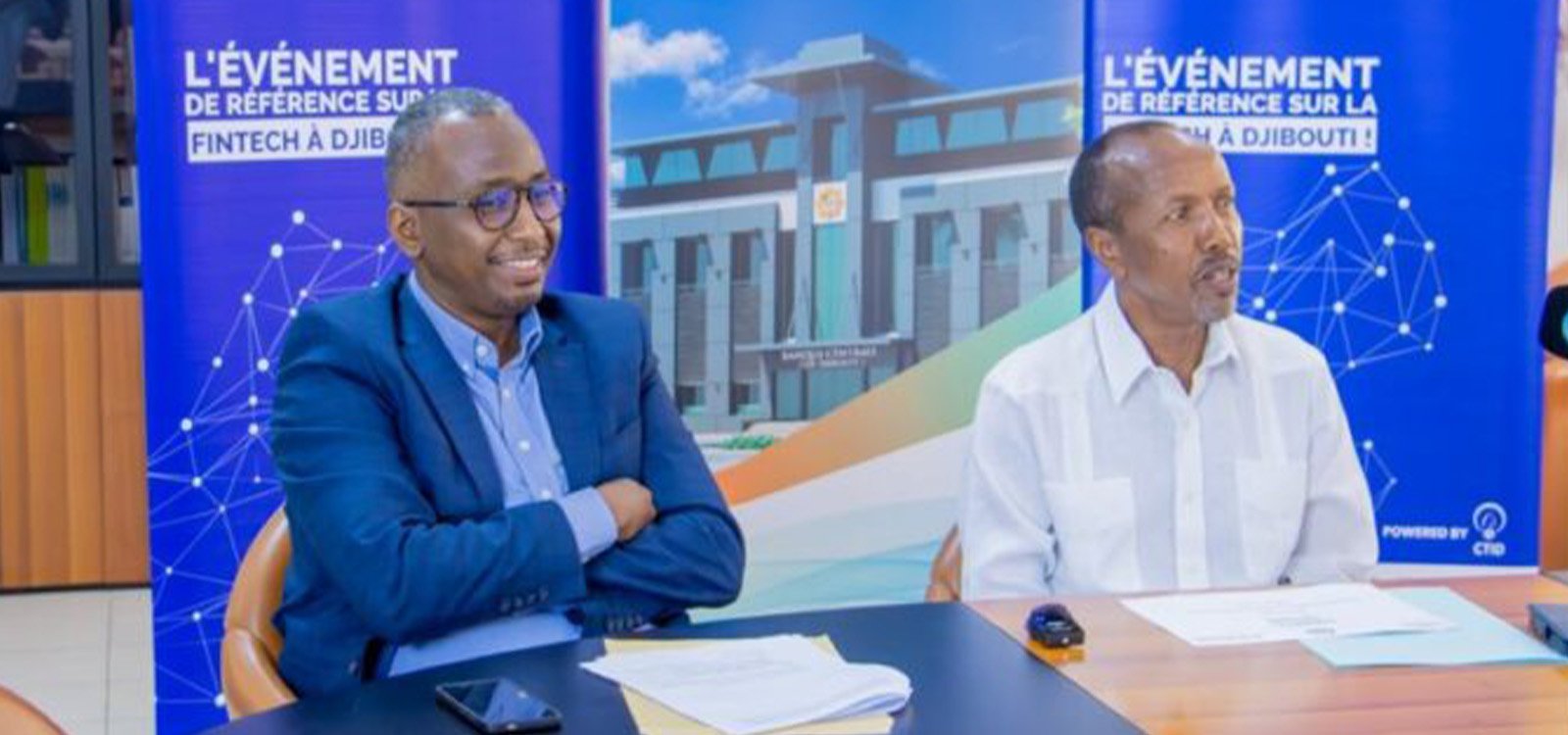
The 2nd edition of the Djibouti FinTech Forum is coming soon.
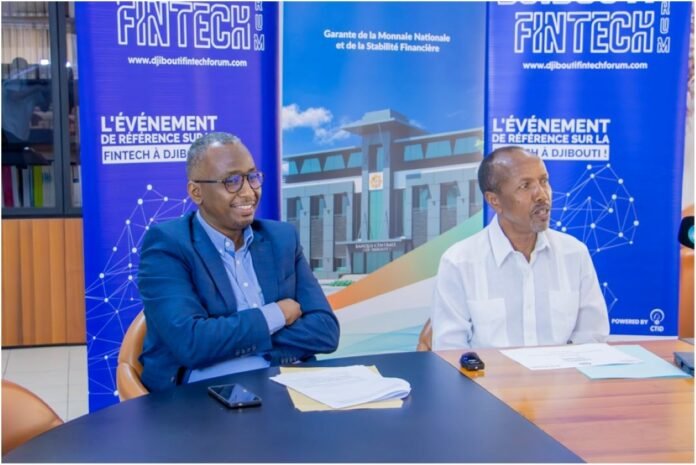
Yesterday, a press conference was held at the Central Bank of Djibouti (BCD) in anticipation of the 2nd edition of the Djibouti FinTech Forum (DFF), which will take place in Djibouti from June 18 to 20. This event is co-organized by the Central Bank of Djibouti and the CTID. On this occasion, the Governor of the BCD, Mr. Ahmed Osman Ali, and the Commissioner General of the DFF, Mr. Samatar Abdi Osman, provided insightful information on the subject by answering journalists’ questions. Report.
Questions to Mr. Ahmed Osman Ali, Governor of the Central Bank of Djibouti.
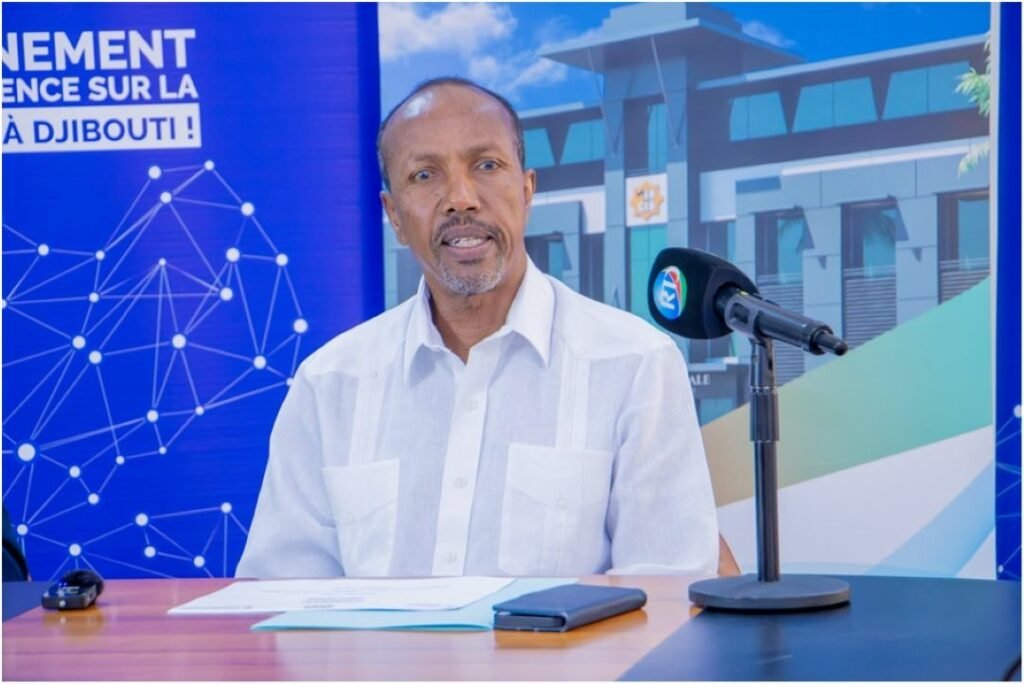
What are the objectives and ambitions for this 2024 edition?
The second edition of the Djibouti FinTech Forum is a unique opportunity for our country to position itself at the forefront of financial innovation. This year, we aim to:
• Catalyze technological innovation: By integrating cutting-edge technologies such as artificial intelligence, deeptech, and agile projects, we aim to transform our financial ecosystem. These innovations will enable the creation of faster, more secure, and more accessible financial solutions.
• Support a dynamic community: We aim to build a strong network of public and private stakeholders to develop an inclusive financial infrastructure. This will strengthen our local ecosystem and support socio-economic development.
• Promote strategic collaborations: The forum will serve as a platform for exchange between fintech specialists, practitioners, and users to discuss opportunities and challenges, improve regulation, and establish sustainable partnerships.
• Launch key initiatives: In partnership with the CTID, we will unveil the very first mapping report of fintech actors in Djibouti. This report will be essential for structuring our ecosystem and identifying growth opportunities.
Given that our government aims to make Djibouti a regional financial center, how can fintechs contribute to this goal?
To make Djibouti an international financial hub, fintechs play a crucial role by providing innovative solutions. Here is how:
• Financial inclusion: Fintech solutions expand access to financial services for all citizens, making them more independent and better socio-economically integrated.
• Service personalization: Through artificial intelligence and big data, highly personalized financial services can be offered, tailored to the specific needs of each client.
• Agility and efficiency: Agile development methods allow fintechs to respond quickly to market changes and continuously improve financial services.
• Security and transparency: Blockchain technologies and deeptech solutions enhance the security and transparency of financial transactions, increasing user trust.
• Capacity for innovation: By leveraging technologies such as deep learning and machine learning, advanced algorithms can be developed for predictive analytics, fraud detection, and process optimization.
• Leveraging the Djiboutian franc: By using our national currency, we can offer competitive payment solutions and financial products at a continental scale, particularly within the African Continental Free Trade Area (AfCFTA).
• Talent development: We plan to develop a high-level training hub to support the fintech sector with highly qualified profiles, ensuring strong and sustainable local expertise.
A word on the Islamic Finance Tour Djibouti, held on the sidelines of the Djibouti FinTech Forum?
The Islamic Finance Tour Djibouti, organized alongside the Djibouti FinTech Forum, is a key initiative to promote Islamic finance in our region through the following dimensions:
• Sustainable finance: Islamic finance is sustainable and complies with Sharia principles, ensuring ethical and responsible financial practices. It is fully aligned with our culture and values.
• Education and awareness: It aims to educate participants on the principles and benefits of Islamic finance.
• Promoting partnerships: It creates a space for collaboration between Islamic financial institutions and local fintechs, paving the way for Sharia-compliant financial solutions.
• Diversification of financial offerings: By highlighting Islamic financial products and services, we enrich our market and make it more inclusive.
Indeed, Islamic finance is experiencing rapid growth across Africa, with 40% of the population being Muslim and services now available in 21 African countries. Djibouti, with its growing port access, progressive banking regulations, and strong intra-regional connectivity, is positioning itself as a logistics and financial hub for East Africa. The country has a small but predominantly Muslim population and excellent regional connectivity, giving it access to the growing Muslim populations in neighboring countries.
Djibouti’s strategic position has been strengthened by the launch of the $3.5 billion Djibouti International Free Trade Zone in 2018, which has increased the country’s attractiveness for regional trade financing. Islamic finance is expected to play a crucial role in this growth. Djibouti has been at the forefront of Islamic finance in the region, with successful projects such as the Doraleh Container Terminal, developed at a cost of $427 million and financed by a consortium of banks including Dubai Islamic Bank and Standard Chartered Bank, with reinsurance from the Islamic Development Bank (IsDB).
Islamic finance in Djibouti is mainly composed of Islamic banking (99%) and microfinance (1%). The market share of Islamic banks has significantly increased, reaching around 20% of total banking assets in Djibouti, up from 1.6% in 2006. This figure is well above the African average of 5%, making Djibouti the second country after Sudan in terms of Islamic banking market share. The country now has four Islamic banks out of ten operating banks, offering a range of Sharia-compliant financial products to both corporate and individual clients. The recent introduction of Takaful and the 2022 initiatives on Islamic microfinance products further strengthen Djibouti’s ecosystem and its potential as a hub for Islamic finance in East Africa.
Moreover, given the economic structure composed of small and medium-sized enterprises and a large informal sector, Islamic financial tools such as Zakat, Waqf, Micro-Takaful, etc., appear as alternatives for financing the social, cooperative, and artisanal economy. This is an excellent way to boost social and financial inclusion in Djibouti.
Despite this growth, challenges remain for the Islamic finance ecosystem in Djibouti, and these issues will be highlighted during the Islamic Finance Tour Djibouti.
Questions to Mr. Samatar Abdi Osman, Commissioner General of the DFF
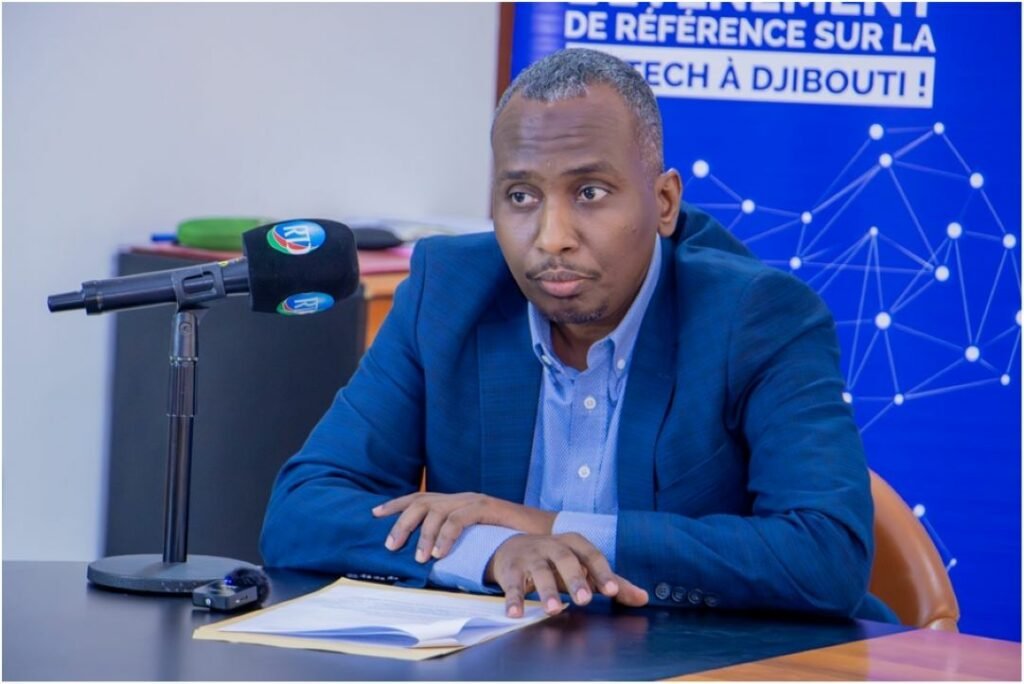
As Commissioner General of the DFF, what can you tell us about the DFF24 event?
DFF24 is the result of our commitment to fostering innovation in the fields of finance and technology in Djibouti. This year, we are placing particular emphasis on:
• Big Data and Artificial Intelligence: These technologies are key drivers to boost our economy and improve access to financial services.
• Collaboration with the Central Bank: The co-organization with the BCD highlights the strategic importance of fintech within our financial ecosystem.
Can you tell us more about the event agenda and the expected outcomes?
The DFF24 agenda will include:
• Conferences and panels: Discussions with global experts on the latest trends and innovations in fintech.
• Workshops and MasterClasses: Interactive sessions to explore concrete and innovative solutions, particularly in Big Data and Artificial Intelligence.
• Exhibitions: A showcase for local and international companies to present their fintech products and services.
The expected outcomes are:
• Enhanced knowledge: A better understanding of the challenges and opportunities in the fintech sector.
• New partnerships: Establishment of strategic collaborations between local and international stakeholders.
• Technological progress: Adoption and integration of cutting-edge technologies to improve our financial ecosystem.
• Continental solutions: Leveraging the advantages of the national currency, the Djiboutian franc, to offer payment solutions and financial products within the framework of the African Continental Free Trade Area (AfCFTA).
A word on the perspectives?
The outlook is very promising:
• Continuous innovation: We envision ongoing innovation in the fintech sector to meet the evolving needs of our economy.
• Regional expansion: Making Djibouti a recognized regional financial hub known for its dynamism and innovation.
• Socio-economic impact: By promoting financial inclusion and economic empowerment, we aim to drive sustainable and inclusive economic growth.
• High-level training: Developing a high-level training center to support the sector with highly qualified profiles, ensuring strong local expertise.